Application Steps
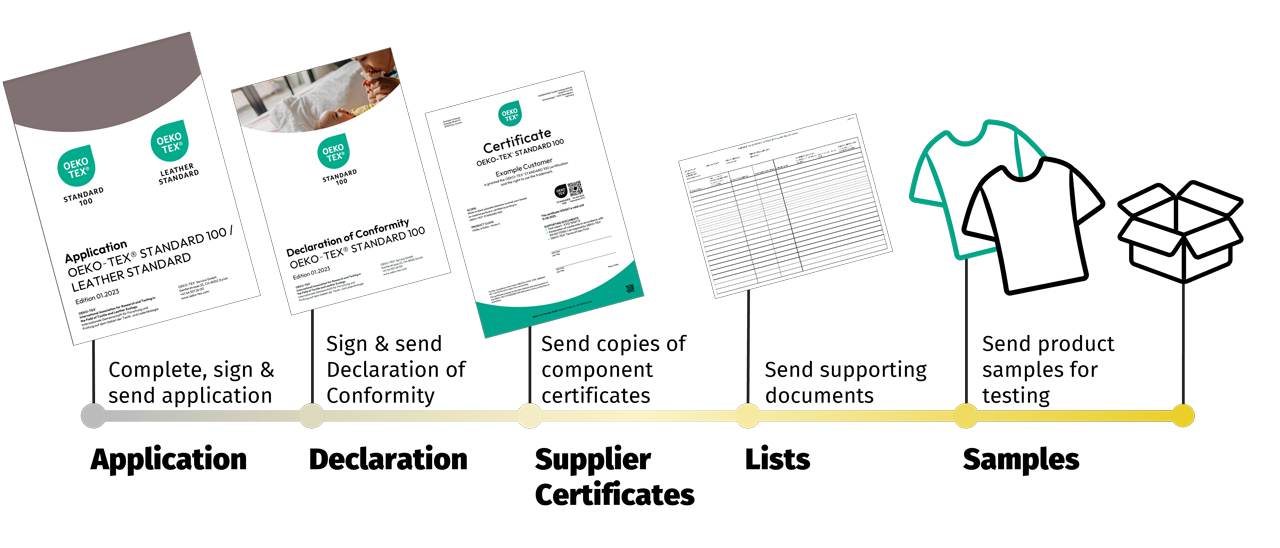
Application
FAQ
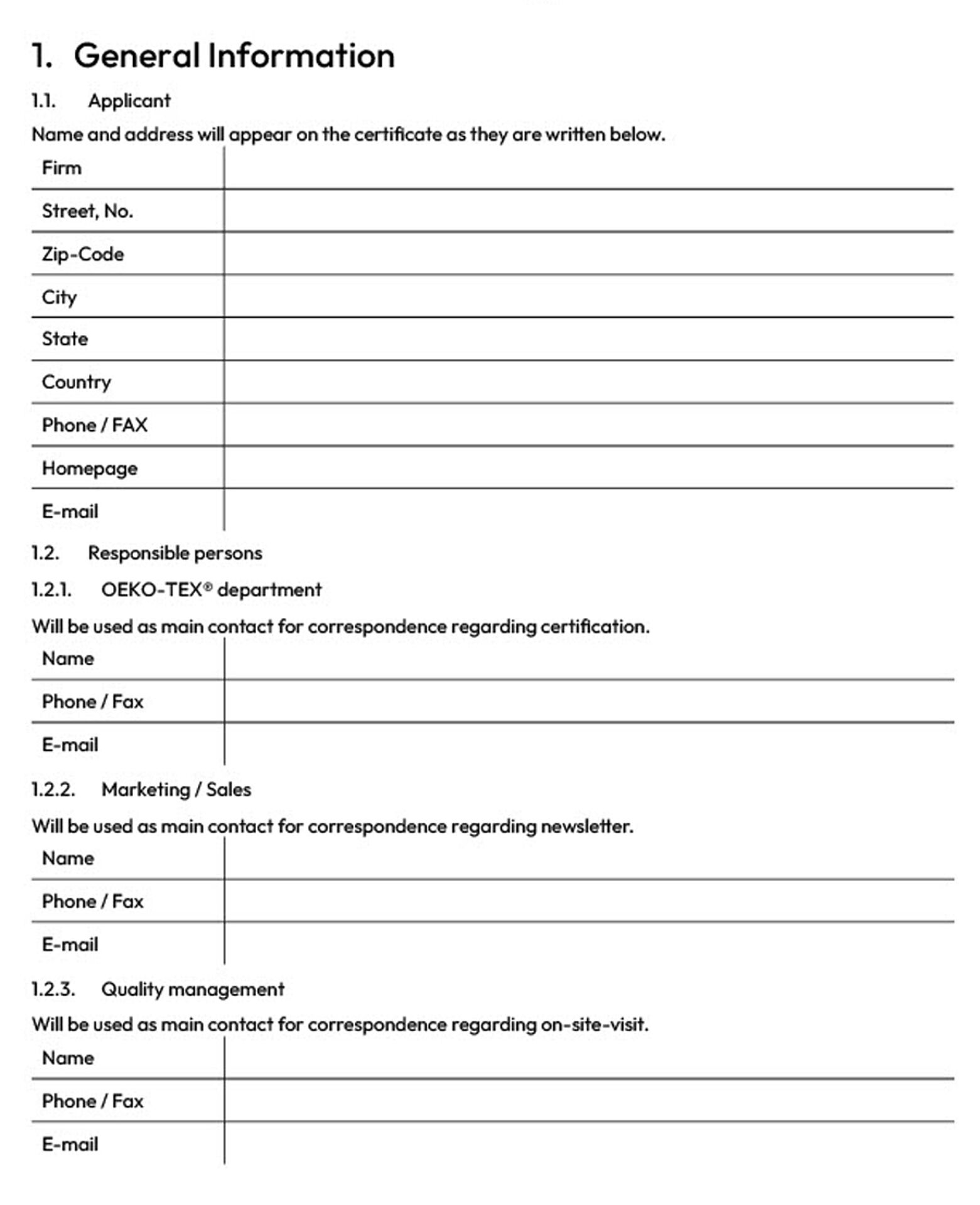
1. Contact info for:
- Your company
- Certification
- Receiving OEKO-TEX® newsletter
- Onsite visit
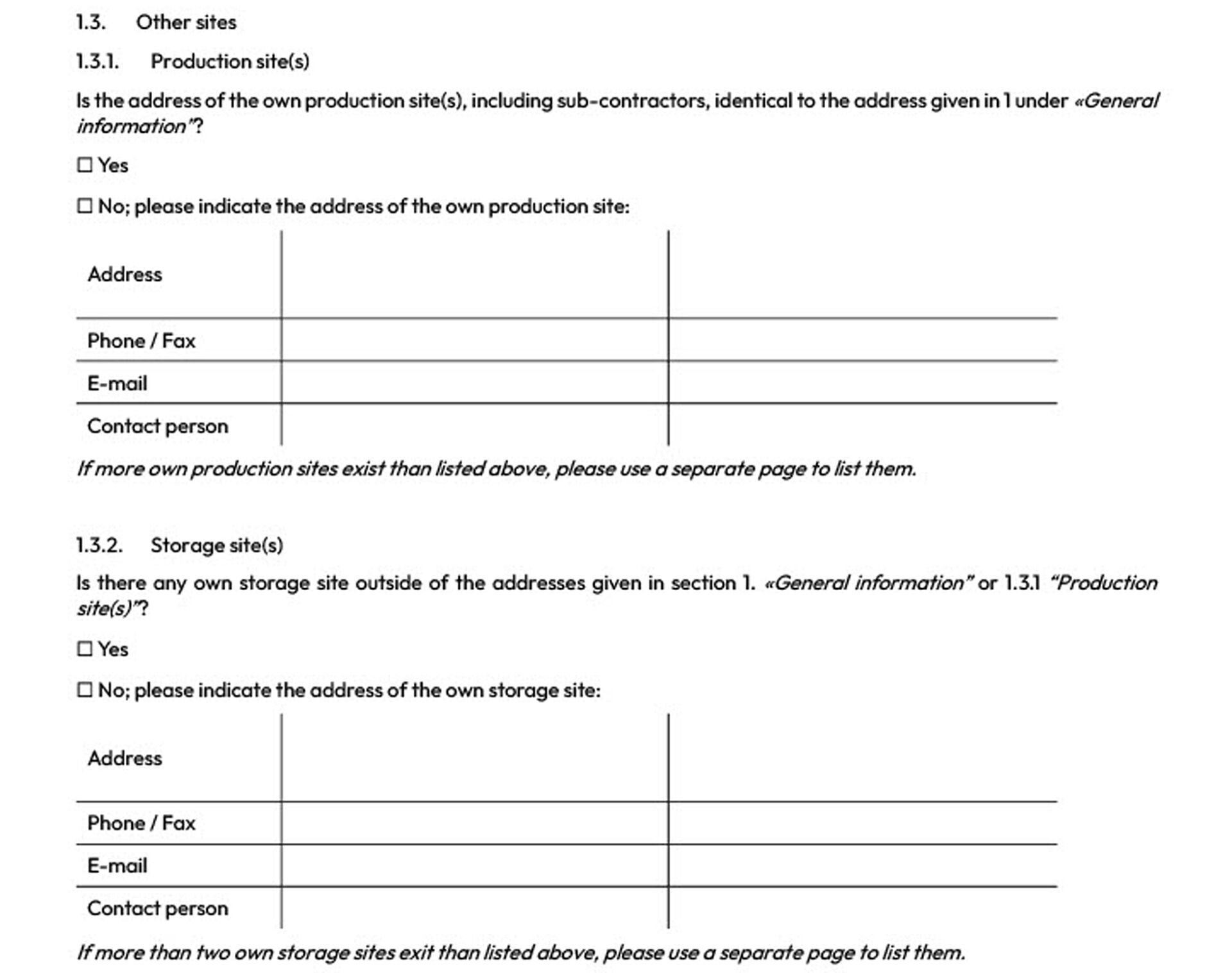
1.3
1.3.1. Is company address in 1.1 the same as production site?
- No - Add address here. Attach word doc with additional locations
1.32. Do you have off-site storage that isn’t listed in 1.1/1.3?
- Yes - Add address here. Attach word doc with additional locations

2.1 Choose Annex
- Annex 4/5
The parameters & defined limit values are reliable, advised & sensible. They are fixed from a human ecological point of view. - Annex 6/7
The expanded criteria catalogue has been developed especially for companies who are focused on the DETOX campaign.

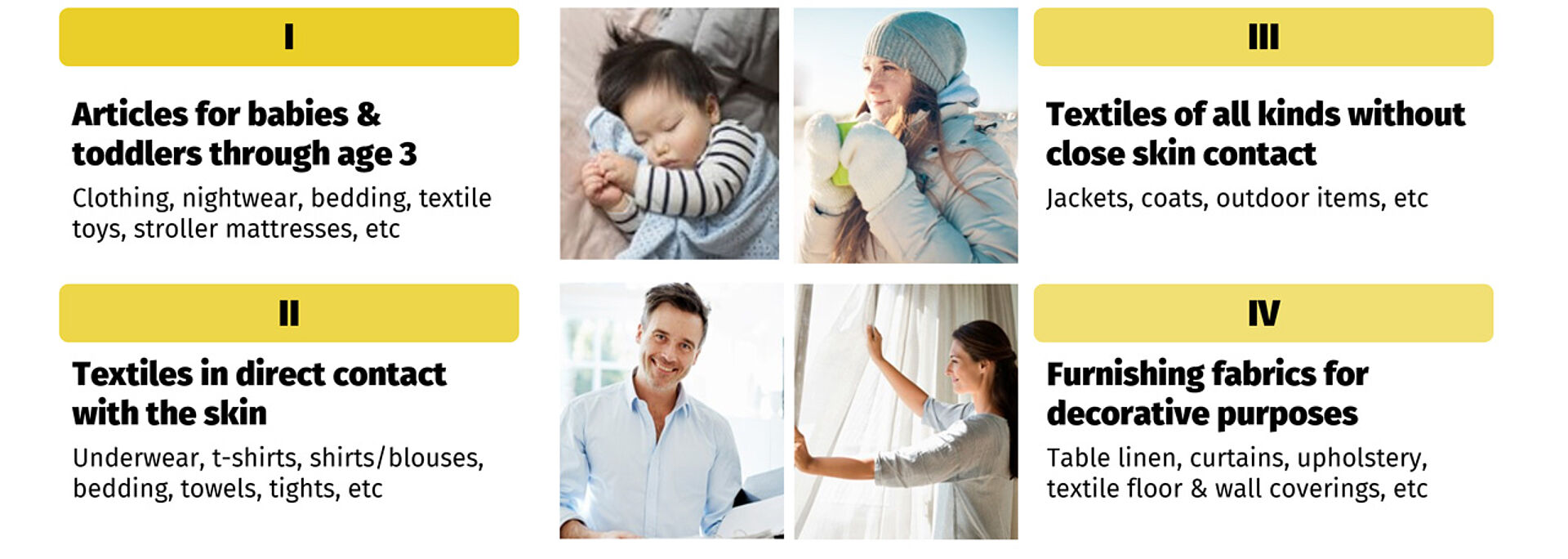
2.2 Classes
Choose only 1 class:
- Covers all higher product classes
- Influences testing requirements
2.3 Description
This description shows up on your certificate.
For renewal: Use last year’s scope & make any changes, additions, deletions.
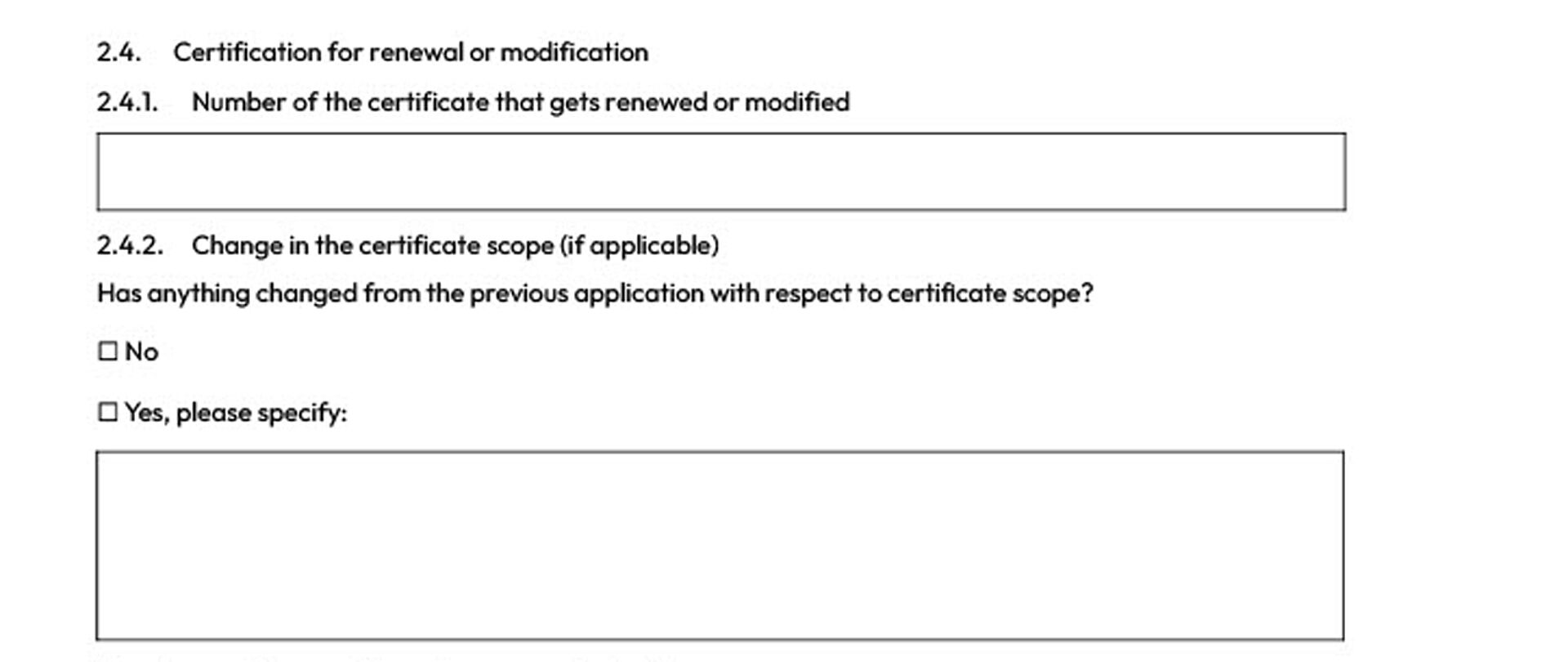
2.4 Renewal or Modification Only
Choose application type:
- First certification
- Renewal
- Modification

3.1. Check all that apply
- Trader = brand/retailer/distributor
- Commission = service without ownership of materials
- Manufacturer = selling product you made
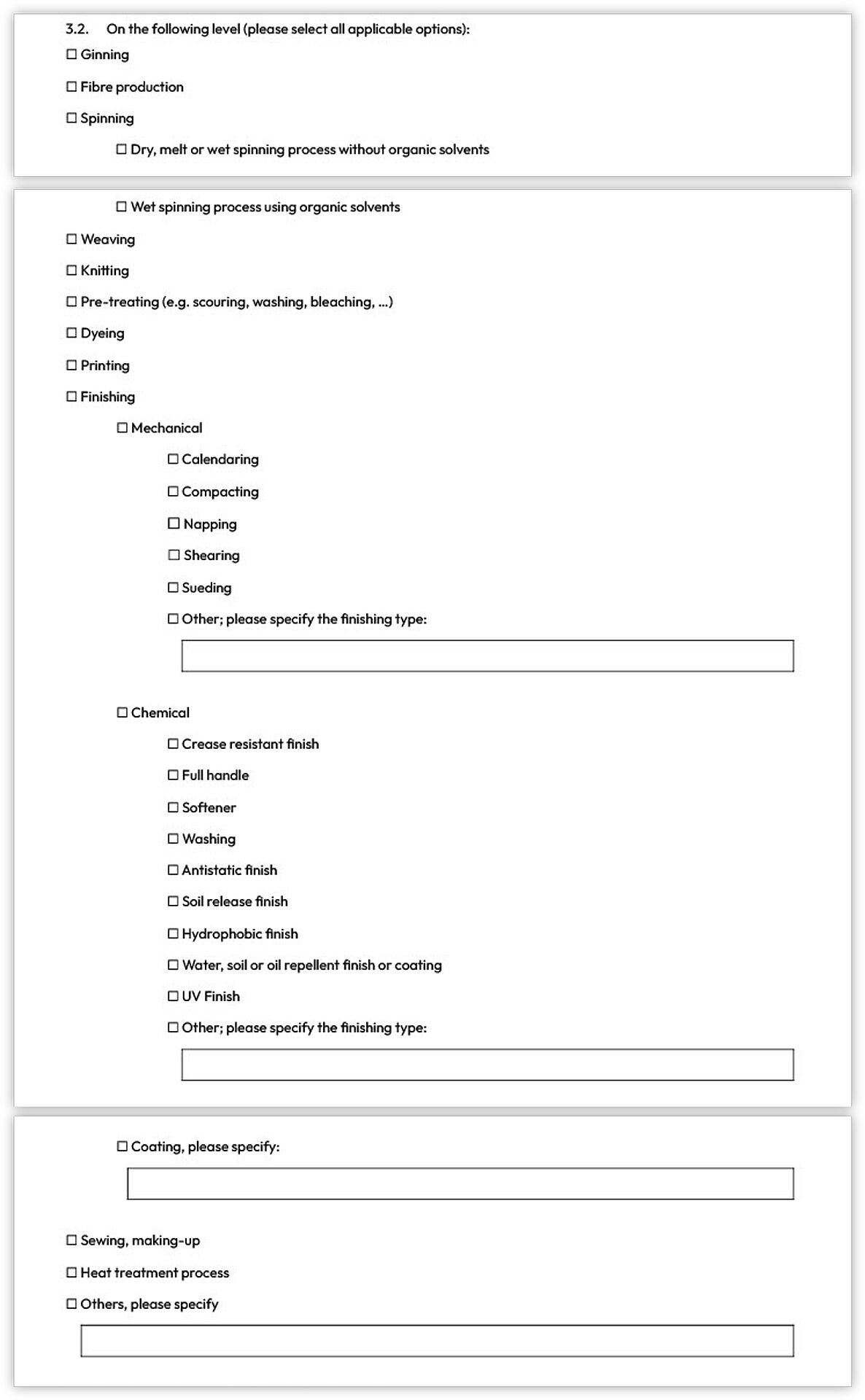
3.2 Your Company’s Production (Textile)
Select all the operations that you do IN HOUSE (self-performed)
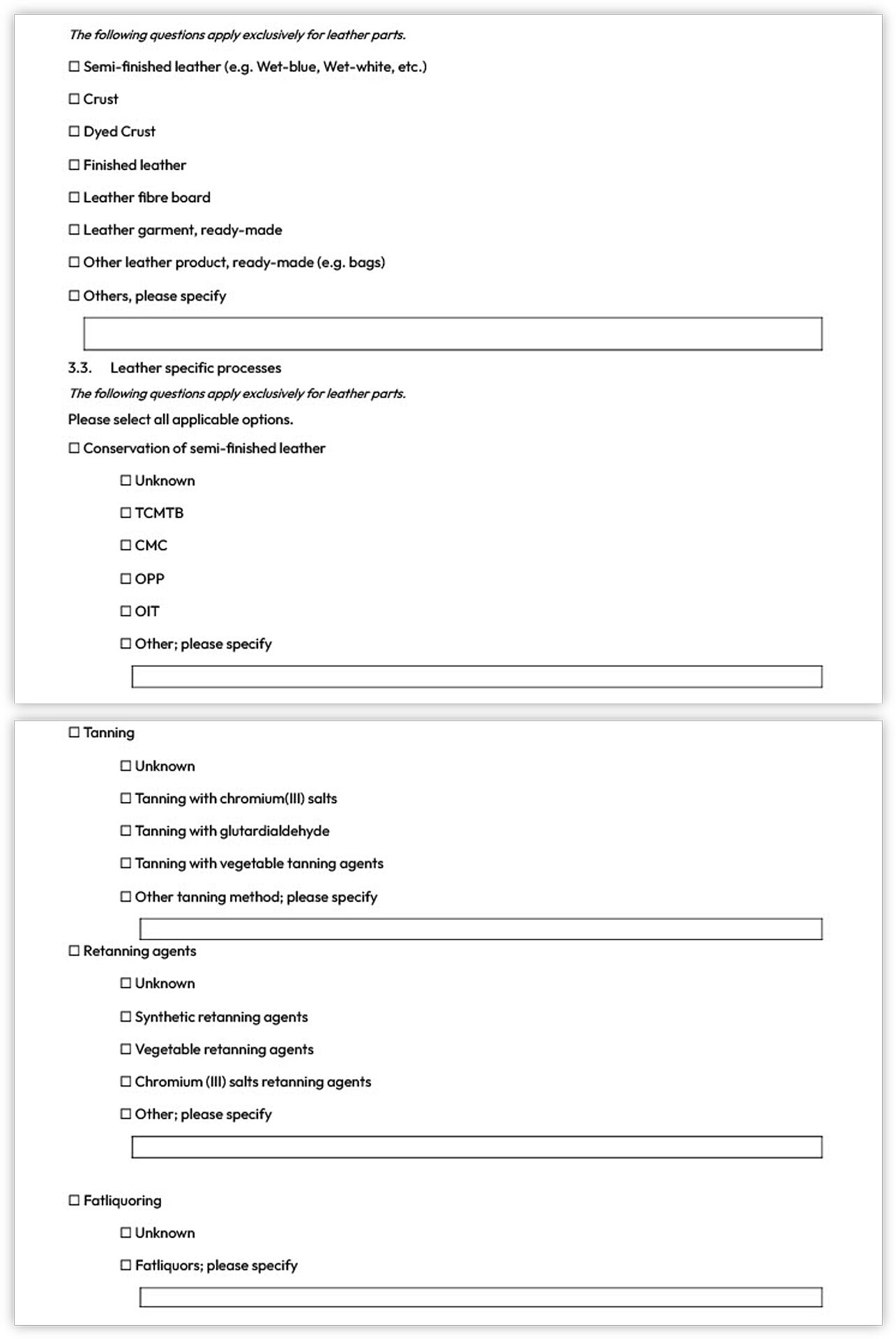
3.2 Your Company’s Production (Leather)
Select all the operations that you do IN HOUSE (self-performed) - Leather parts & process only
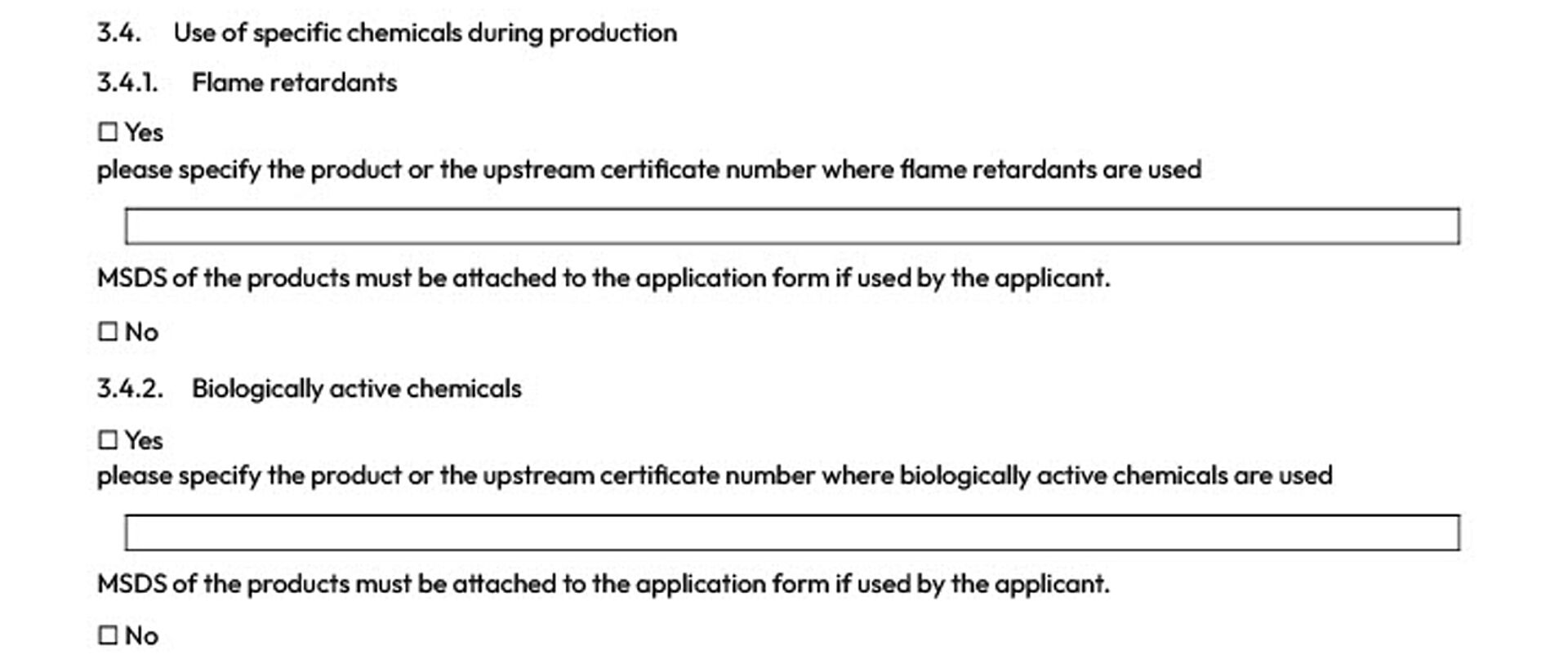
Active Chemical Products
Are any of these used during production?
- 3.4.1. Flame retardant products
- 3.4.2. Biologically active products (including antimicrobial)
*Include copy of the MSDS with submission (in English)
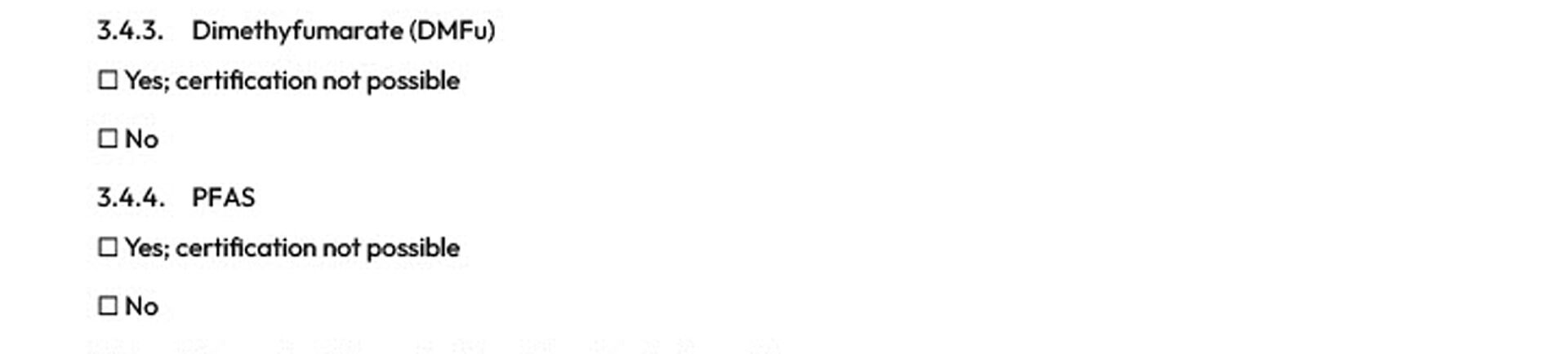
Banned Chemicals
Are any of these used during production?
- 3.4.3. dimethylfumarate (DMFu)
- 3.4.4. PFAS
*Certification is NOT possible when these are used
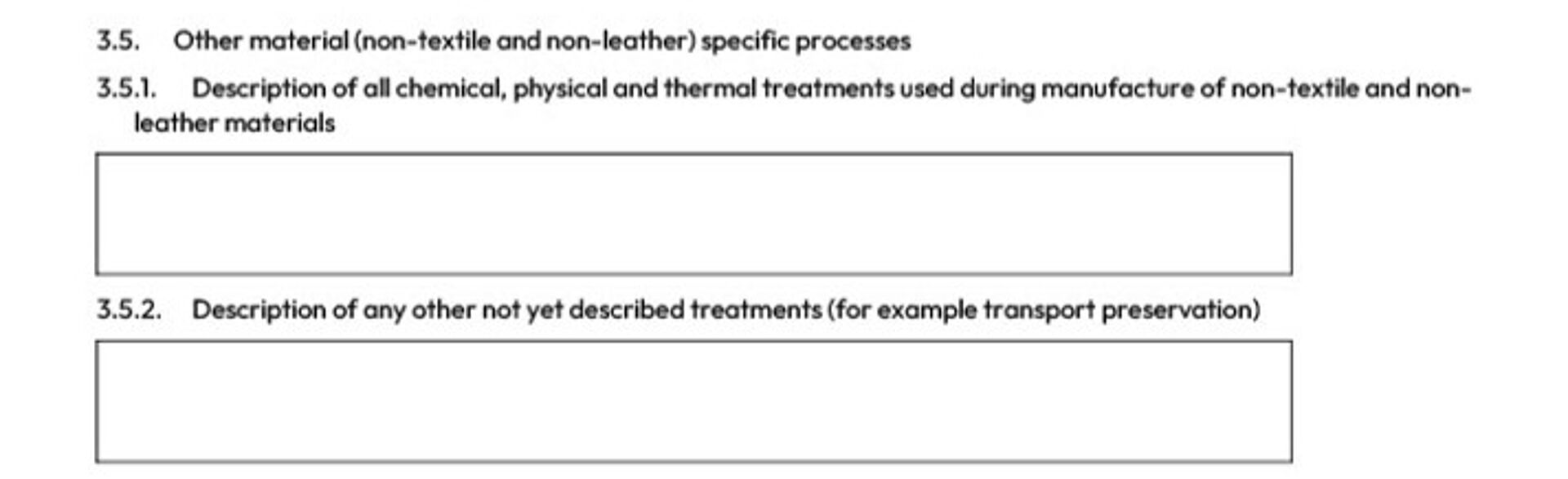
Other Materials & Treatments
3.5.1. Describe processing for non-textile & non-leather materials
3.5.2. Describe any other treatments
4.1 Material Contents: Organic Cotton
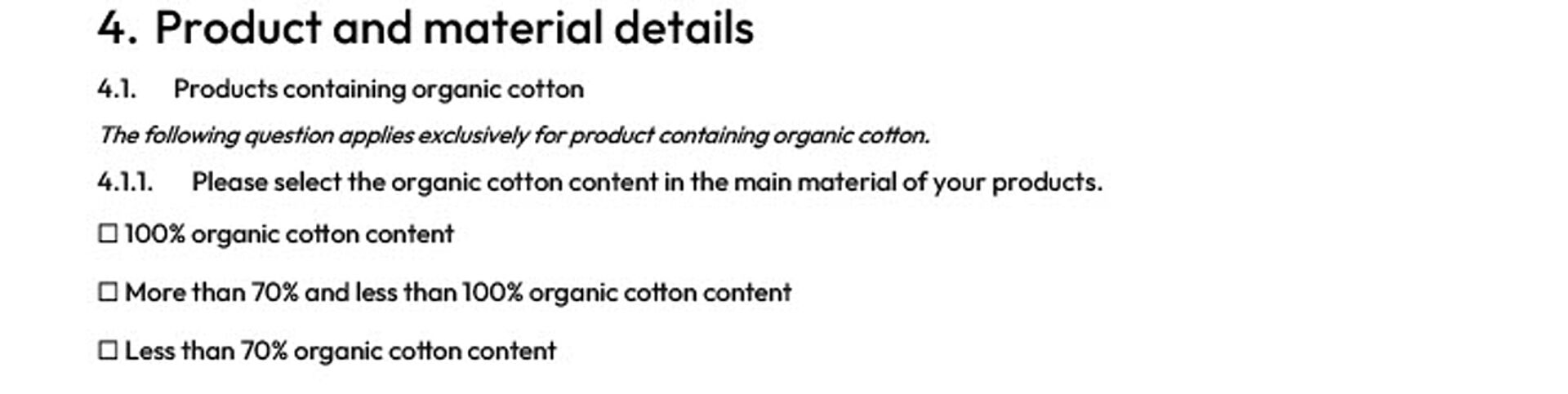
If organic cotton is used, what percentage is organic?
- If <70%: pre-certification of cotton according to OEKO-TEX® ORGANIC COTTON is required to mention organic cotton in scope
- If >70%: application for OEKO-TEX® ORGANIC COTTON is required or no mention of organic in the scope
4.2 Material Contents - Leather
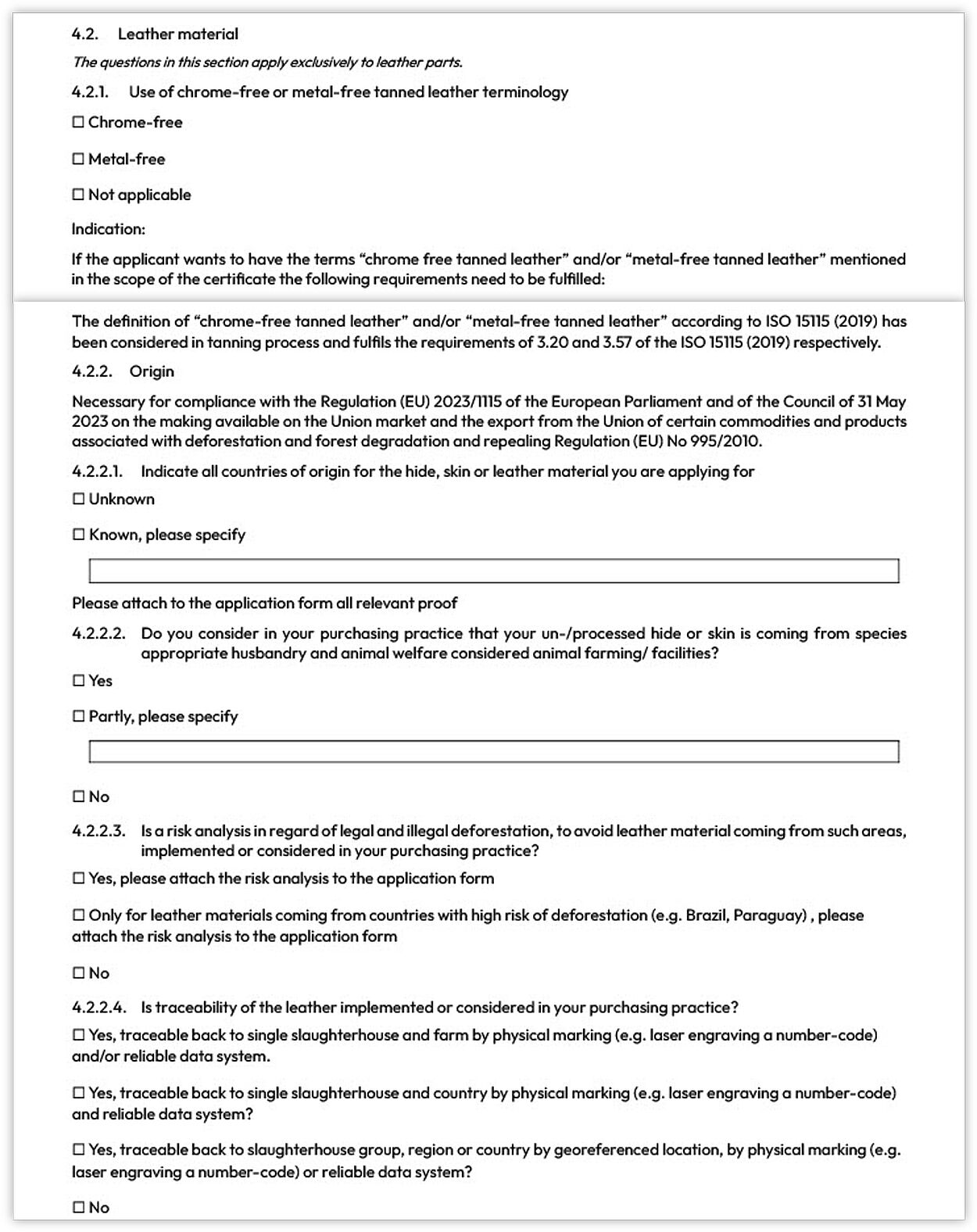
If leather is used, check all that apply
- Chrome-free
- Metal-free
- N/A
4.3 Material Contents - Recycled
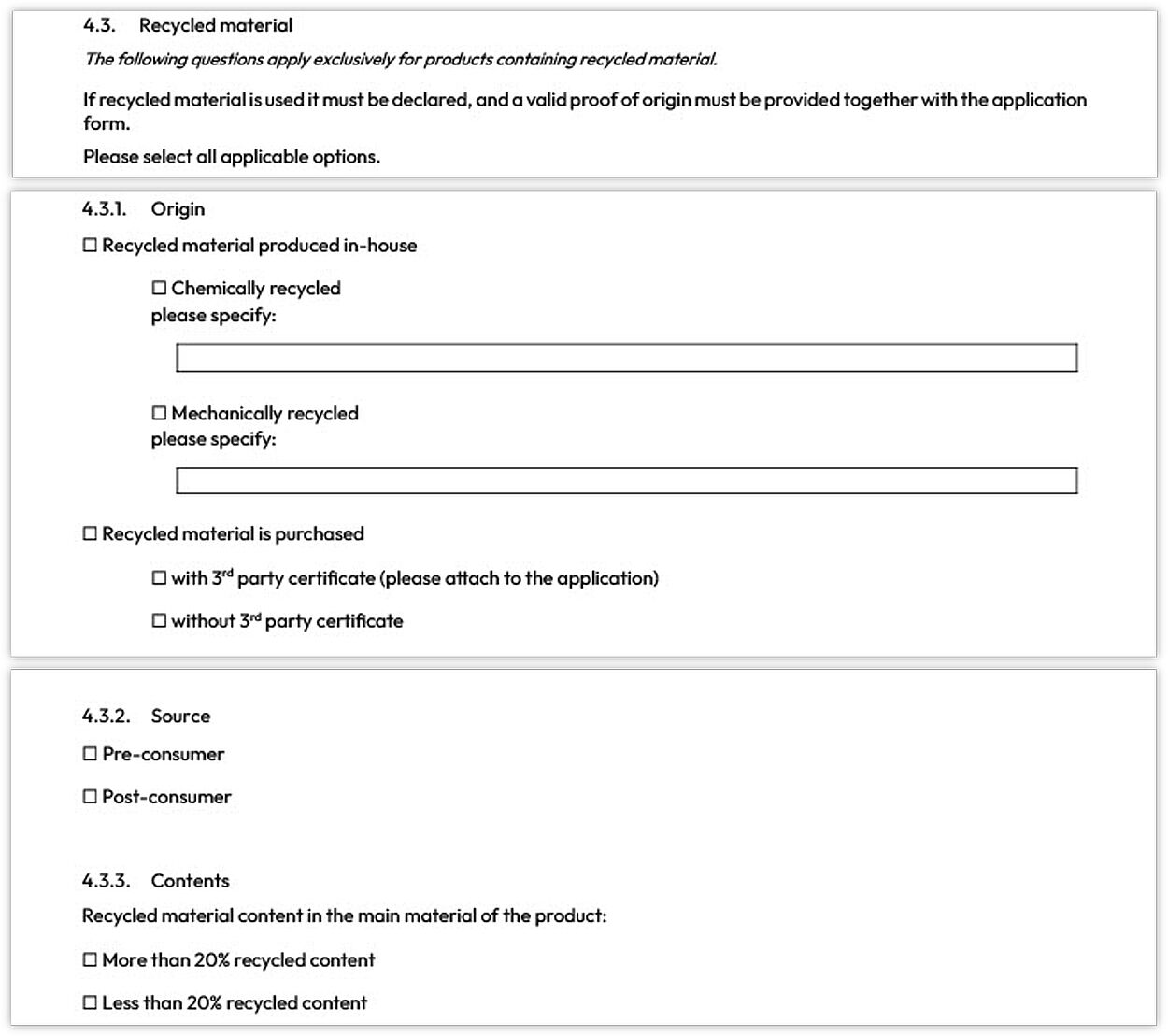
4.3.1. Check if you produced the recycled material - specify chemical or mechanical recycling process
- Check if you purchased the recycled material
- Certified - Attach certificate of origin
- Not certified
4.3.2. Source - Post- vs pre-consumer
4.3.3. Contents - % recycled material in product
Please note:
- Attach certificate of origin or validation of any recycled material claim
- Separate STANDARD 100 certificate is required for products with >20% recycled content
- Additional testing may be required depending on recycled source
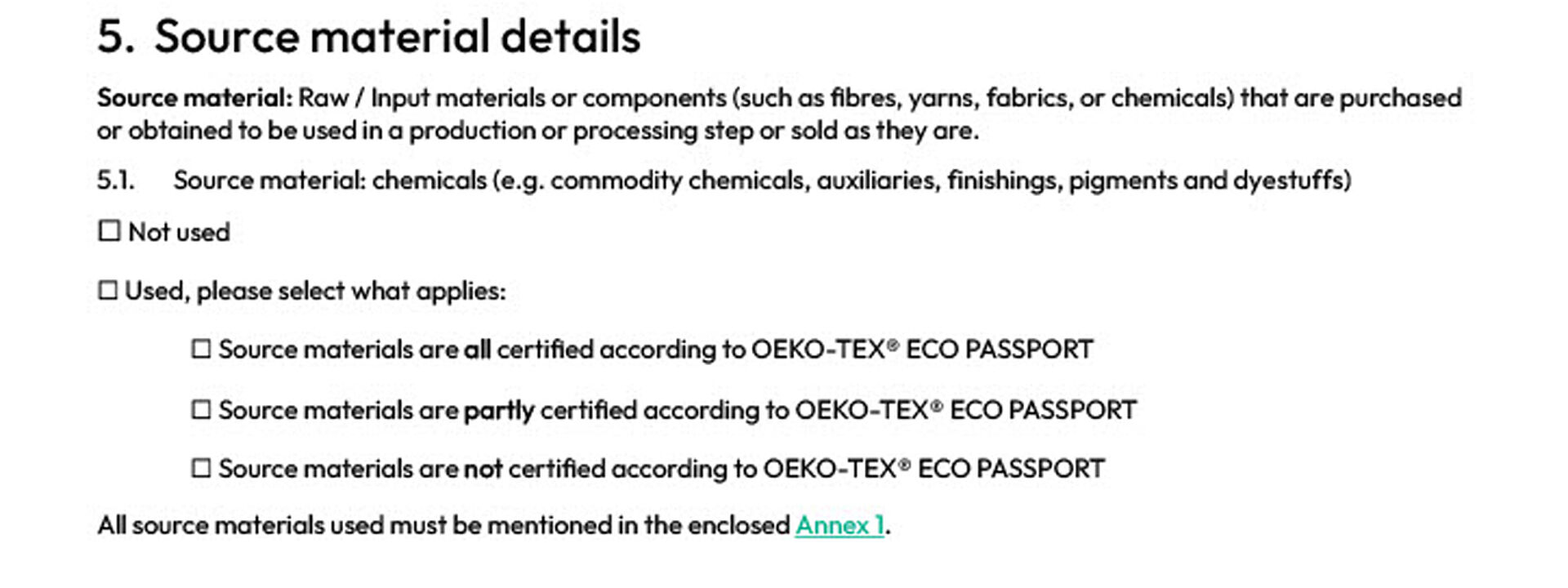
5.1 Do you buy chemical inputs?
If yes, how many of your sourced chemicals pre-certified to OEKO-TEX® ECO PASSPORT?
- All
- Some
- None
Provide copy of valid ECO PASSPORT certificates AND proof of purchase between certificate holder & applicant
Use this spreadsheet to keep track.
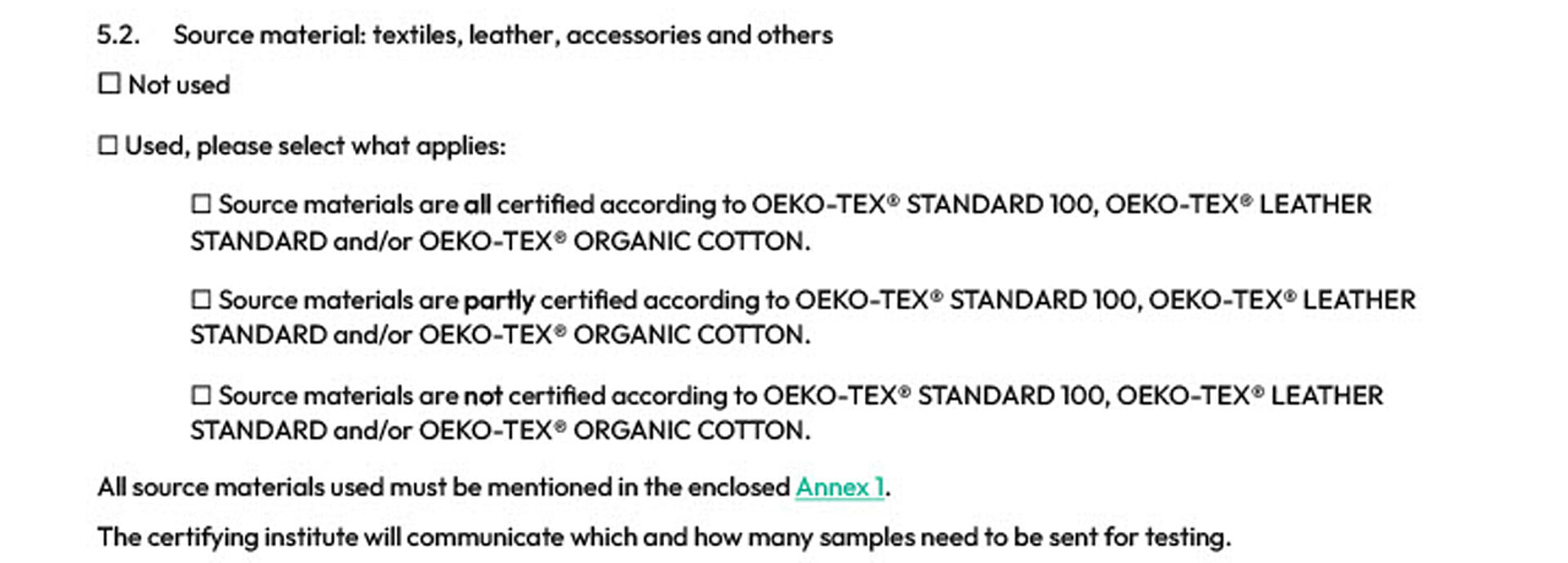
5.2. Do you buy other inputs?
If yes, how many of your sourced materials pre-certified to OEKO-TEX® STANDARD 100, LEATHER STANDARD or ORGANIC COTTON?
- All
- Some
- None
Provide copy of valid OEKO-TEX® certificates AND proof of purchase between certificate holder & applicant
Use this spreadsheet to keep track.
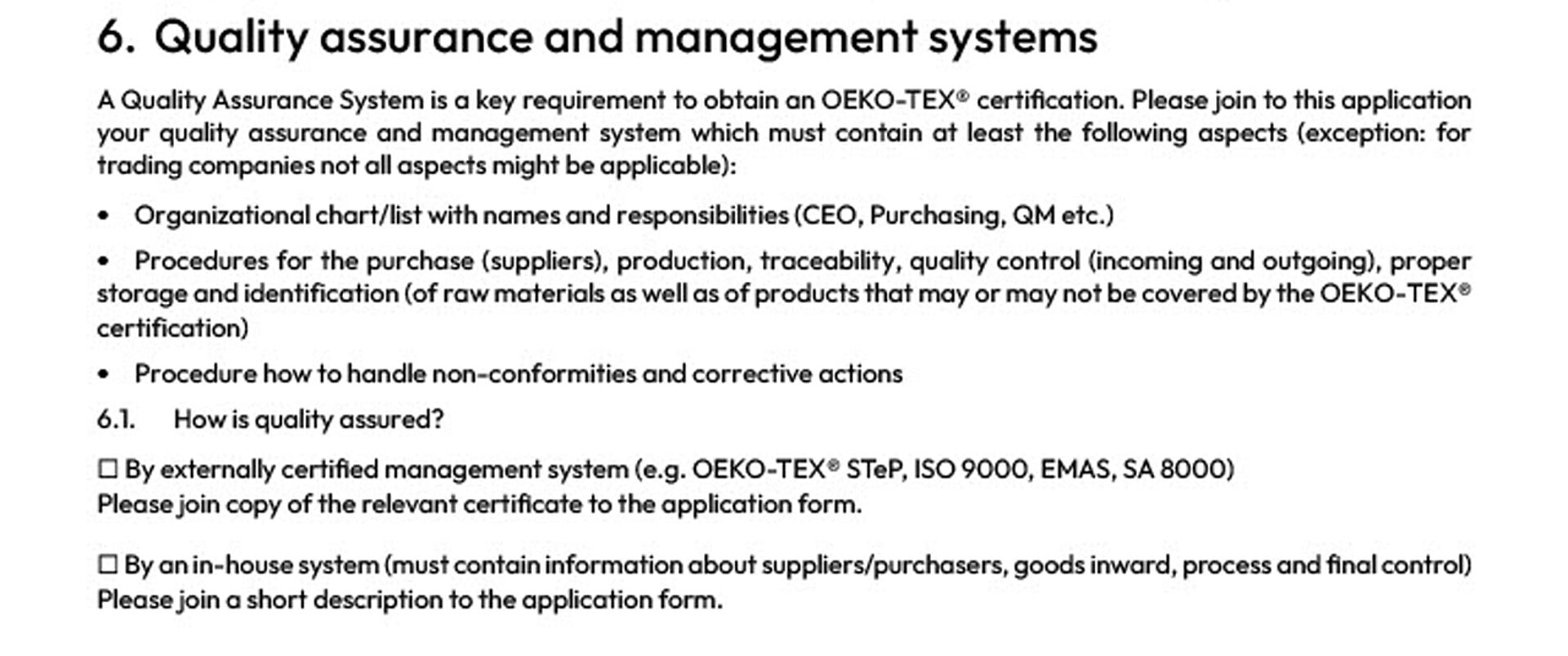
6.1. What is your quality system?
Certified management system
→ Attach certificate
In-house system
→ Must provide:
- Quality management procedures
- Organizational chart
- Non-conformity procedures
7.
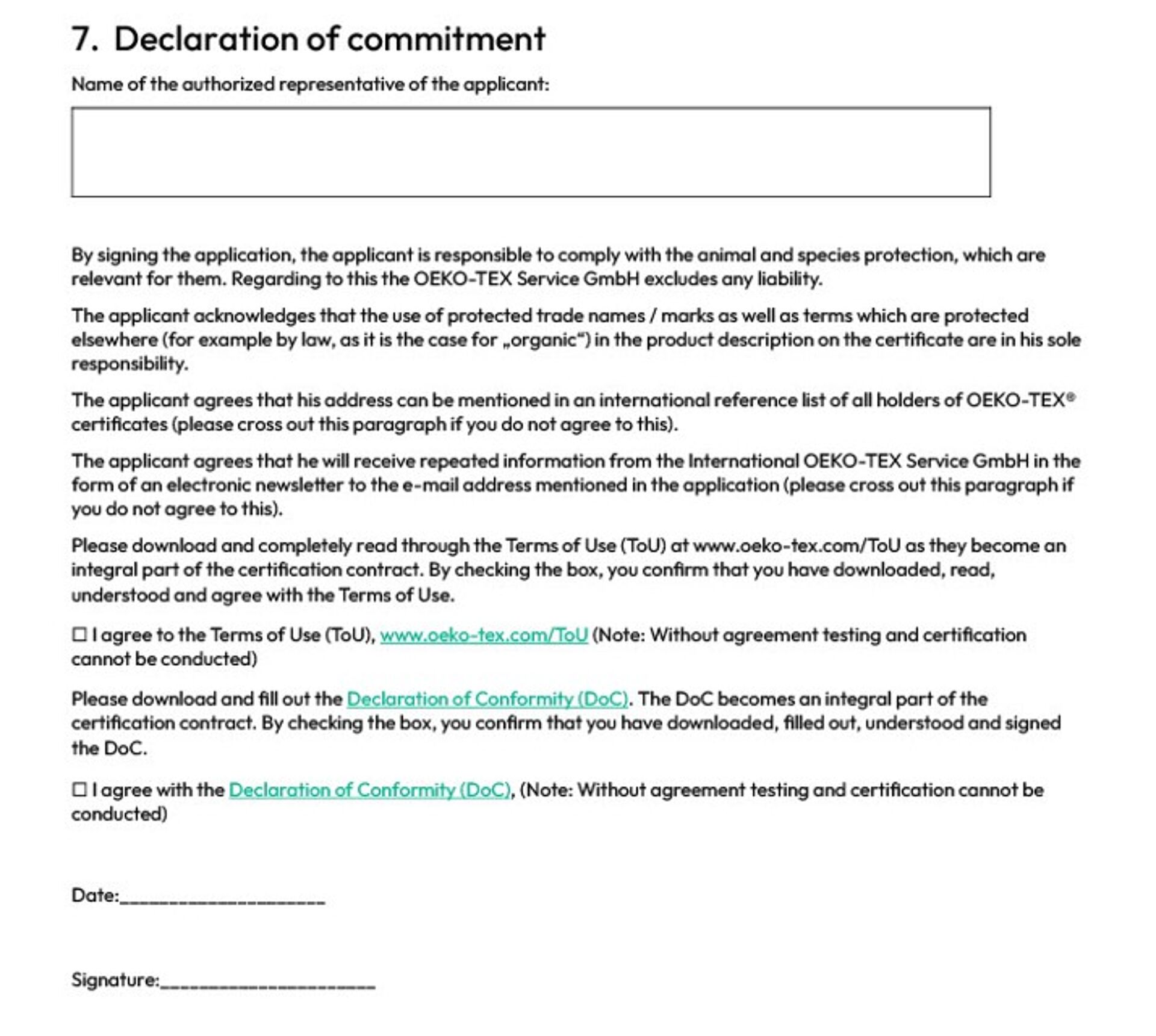
- Name of person applying
- Agree to Terms of Use
- Agree to Declaration of Conformity (separate document)
- Date
- Sign
- Company name and address must match certificate
- If there is a change from previous application, send new legal documents (W2, etc)
- Include personal name and company name
- Must select annex (matching application)
- If there are changes between application submission and completion, a new declaration is required
Download the applicable document.
STANDARD 100
LEATHER STANDARD
ORGANIC COTTON
Include copies of supplier certificates (STANDARD 100, LEATHER STANDARD, ECO PASSPORT).
Send proof of quality assurance and external certificates.
Proof of quality assurance and management must include:
- Organizational chart/list with names and responsibilities (CEO, purchasing, QM etc.)
- Documented standard operating procedures for the purchase (suppliers), production, traceability, quality control (incoming and outgoing), proper storage and identification (of raw materials as well as products that may or may not be covered by the OEKO-TEX® certification)
- Documented standard operating procedure on how to handle non-conformities and corrective actions
Recycled Materials
- Complete details in the supporting documents spreadsheet - Recycled Materials tab
- Include certificate(s) of origin for each recycled material
Organic Materials
- Include traceability certificates
Sample Instructions
Submit material samples, including:
- All types of pre-treatment, finishing and coloration processes
- All dye classes and dyestuffs evenly distributed in maximum concentration
- Samples in red, yellow, green, blue, black, white, orange and purple
- Max 5 dyestuffs per sample
- Samples in each fluorescent color to be tested separately
- All printing dyestuffs in maximum concentration:
- Solid printed color swatch: 12” x 12” (30 x 30 cm)
- One block print per dyestuff, five samples from current production for each printing process
- Screenprints, heat transfer, sublimation, direct, etc.
- 12” x 12” full coverage drawdowns of red, yellow, green, blue, black, white, orange and purple
- Submit a collection of printed samples that will cover red, yellow, green, blue, black, white, orange and purple in pattern
Include:
- Completed and signed application
- Signed Declaration of Conformity
- Supplier certificates (with relationship proof) and supporting documents (electronic versions preferred)
Optional: Also print and staple supplier certificates to the specific sample - Samples
-Processing can NOT begin until all samples are received
-Shipping all samples together speeds the process
Packaging:
Test sample packaging must satisfy specific quality requirements in order to protect the samples and guarantee accurate, reproducible and meaningful test results.
- Test samples must be packed individually in tear resistant polyethylene film or polyethylene bags, to avoid contamination during transport
- The samples should be wrapped twice and sealed with adhesive tape
- The packed bags must be properly labeled for identification with sample numbers, material, supplier, receipts, etc.
- Packing test samples solely in cardboard boxes and/or paper is strictly prohibited
- Whether shipping from separate locations, direct from suppliers or in one box: please ensure all samples are clearly and correctly labeled so that they can be matched with your application
Ship:
- For US/CANADA/MEXICO/HONDURAS/GUATEMALA customers:
Hohenstein Institute America
304 Sroufe Street
Ligonier, IN 46767
USA
+1 800 731 9468 - For other AMERICAS customers:
Hohenstein Laboratories GmbH & Co. KG
Schlosssteige 1
74357 Boennigheim
GERMANY
+49 7143 271-0 - For all OTHER customers:
Please check with your local Hohenstein contact.
Email:
- In addition to including them with the shipment, please email the documents to your main Hohenstein America contact
- Your company's W9 form
- Any vendor forms required for your company to process payments
Avoid Delays:
- Provide clear, detailed information in the application & supporting documents – what are you making, how are you making it, and what is it made of?
- Respond to inquiries in a timely manner – if there are questions or things that need clarification during the review process, respond as soon as you’re able
- Be prepared to pay once the invoice is issued – payment in advance of testing is required for the first certification
- Clearly label samples. Consolidate shipments if possible
Evaluation Steps
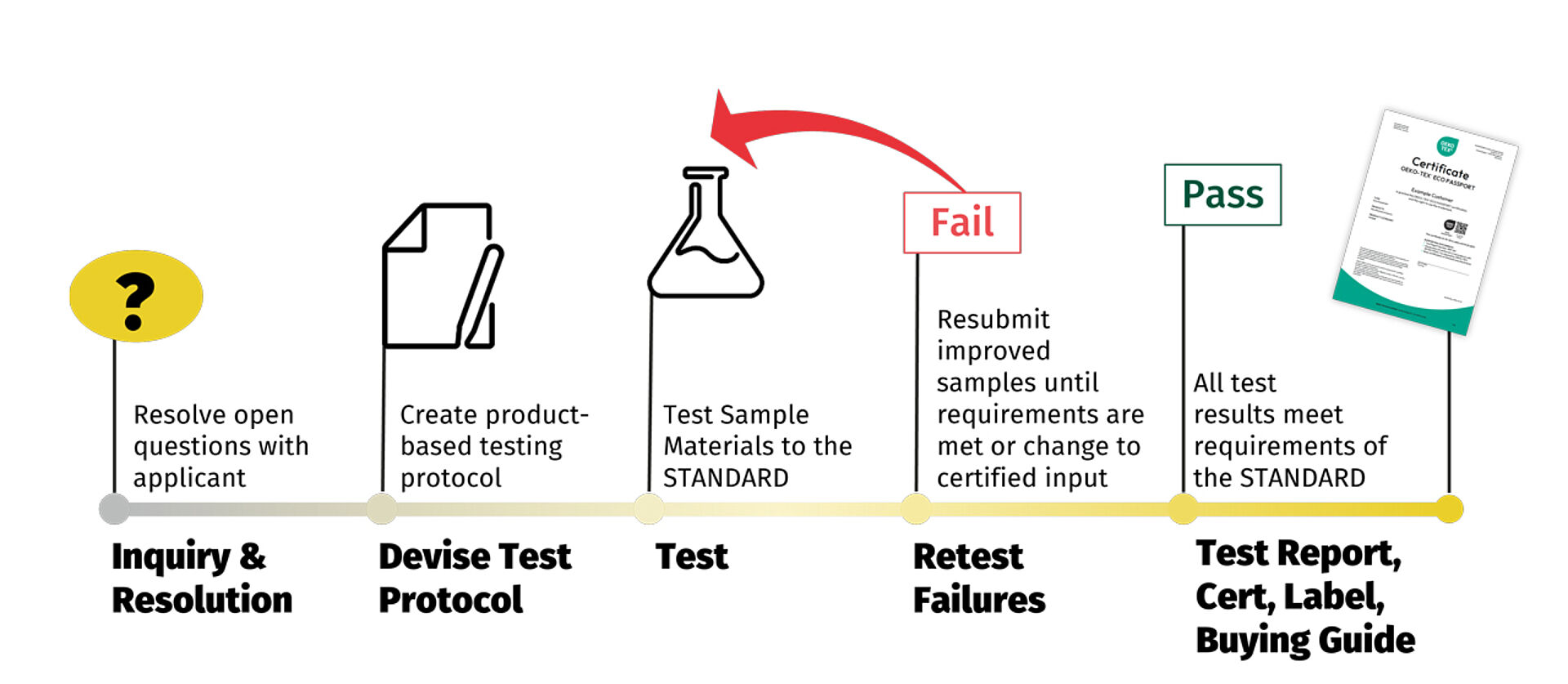
Hohenstein team:
- Reviews the information and follows up with questions on any open items
- Creates a testing plan
- Provides the price for the certification
- Ships the samples to our lab in Germany (for US customers)
Testing takes ~2 weeks once shipment goes through customs.
If all testing is passed, you will receive:
- Test report
- Certificate valid for 1 year
- Product label valid for 1 year
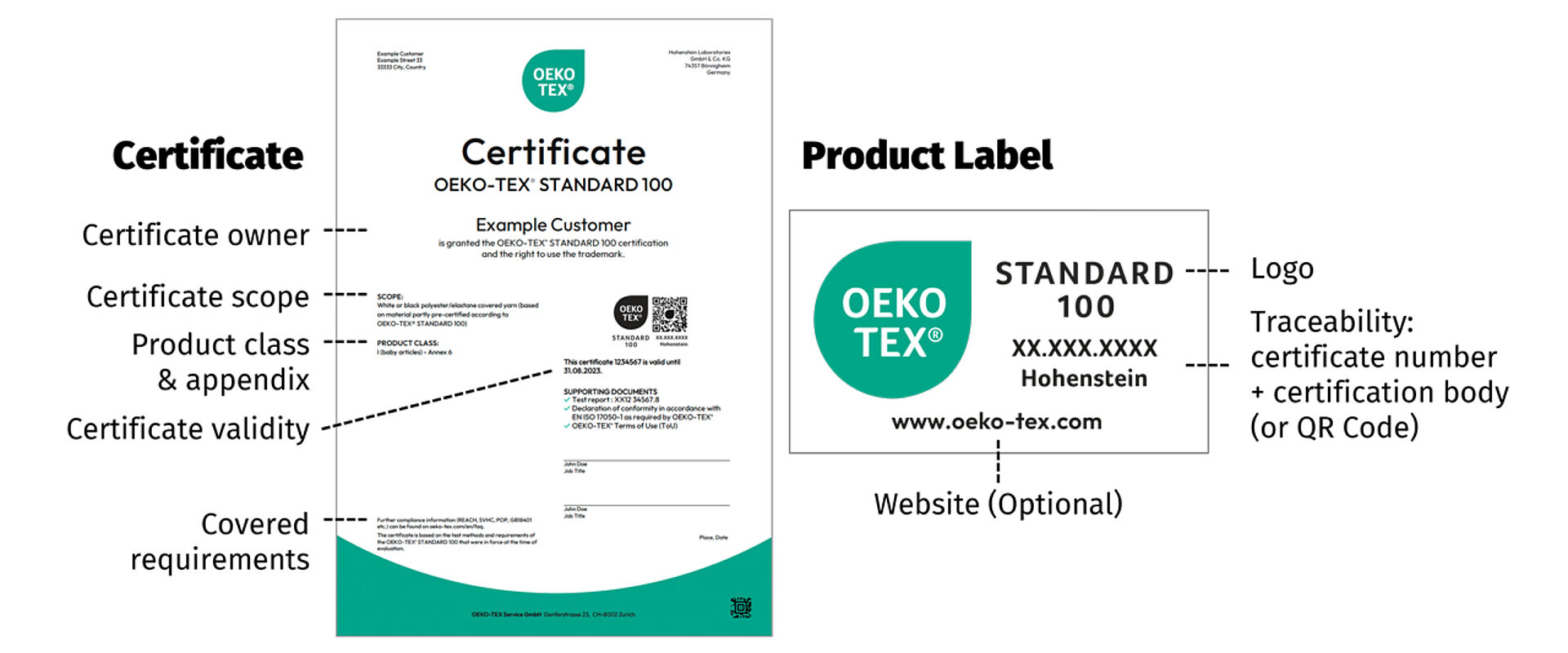
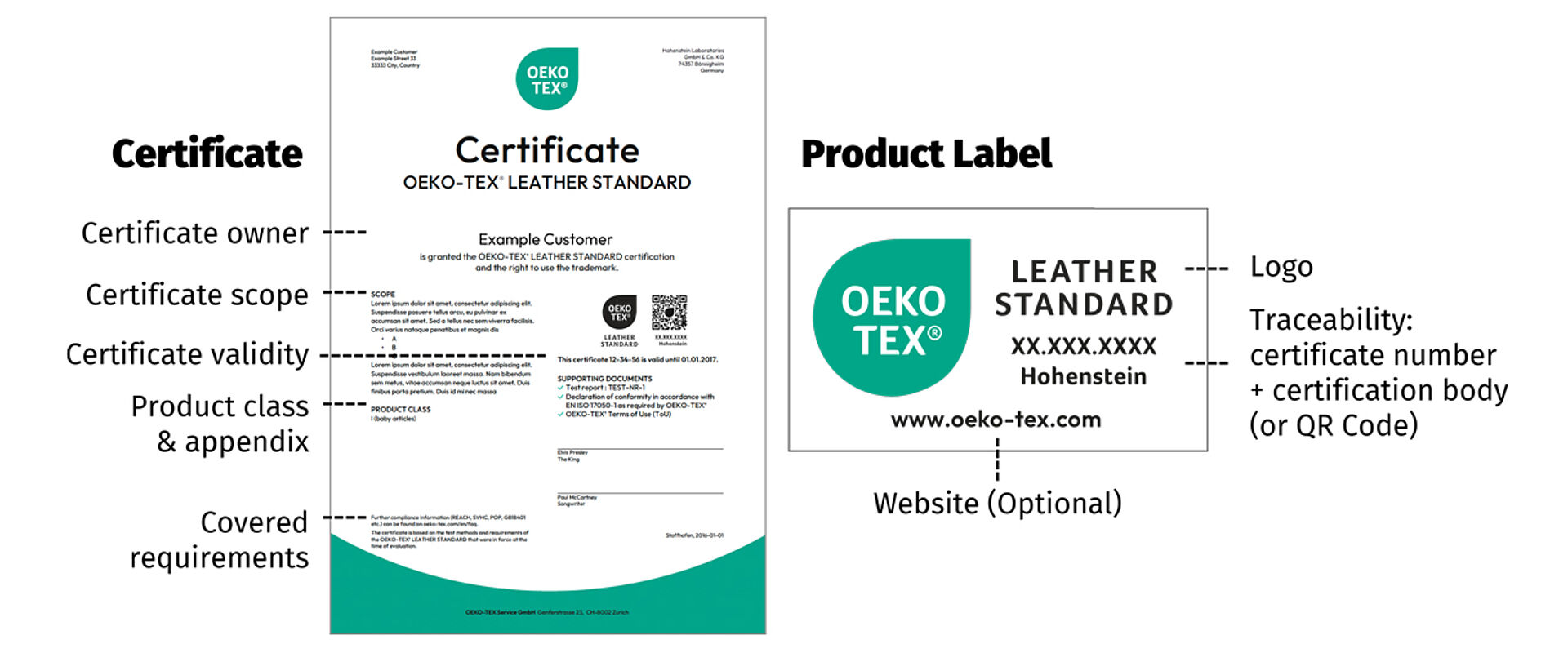
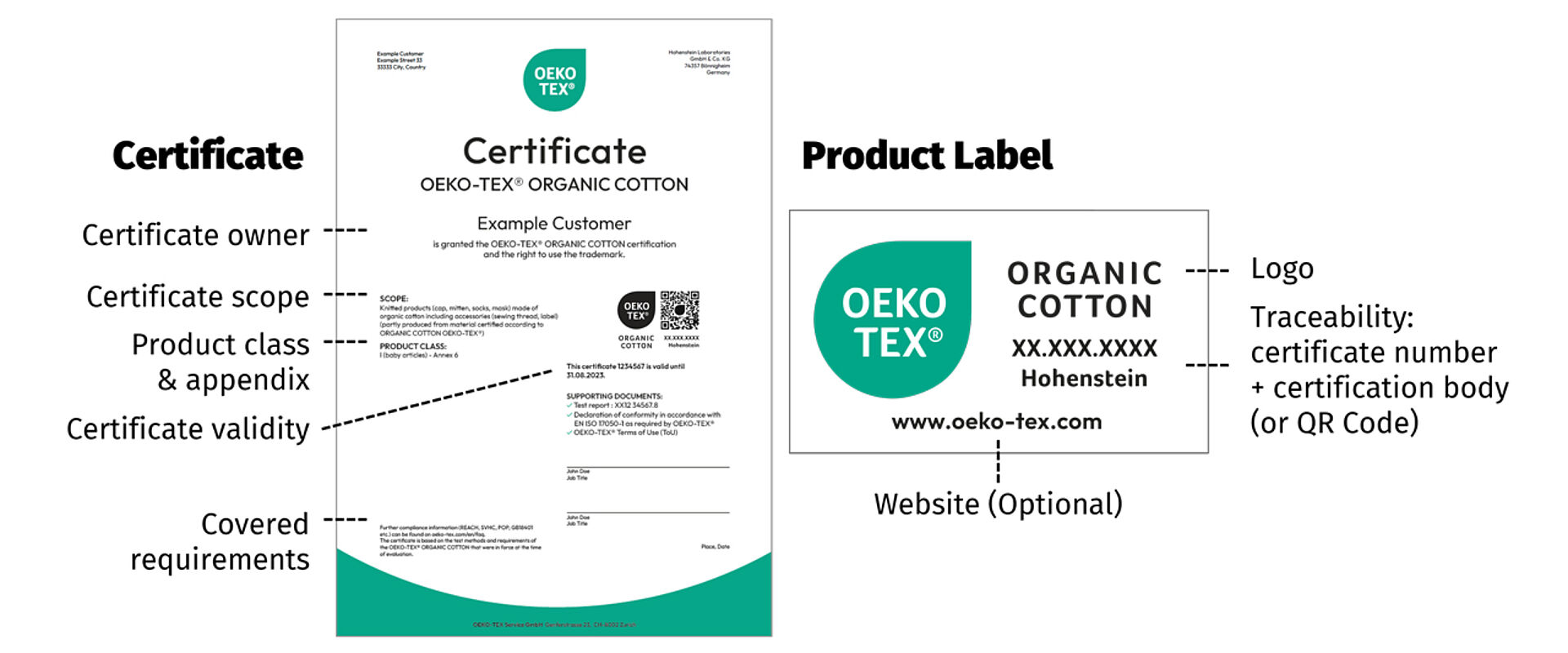
After the certificate is issued, we will schedule an on-site visit of your facility to complete the certification process.
To ensure:
- Application matches reality
- Quality assurance system is in place
- Knowledge of certificate benefits cost reduction opportunities
When:
- For STANDARD 100 and LEATHER STANDARD:
- Within 1 year of certificate
- Every 3rd year thereafter
- For ORGANIC COTTON:
- Every year
- Before the certificate is issued